
Kinexon Ball Tech Blunder: How a VAR Glitch Decided the Basque Derby
The Basque derby between Athletic Club and Real Sociedad was rocked by a major technology scandal after a synchronization error in the Kinexon smart ball system led to a controversial penalty, deciding the 2-1 match and casting serious doubt on La Liga's VAR accuracy.

Athletic Club's 2-1 victory over Real Sociedad in the Basque derby on Matchday 11 of La Liga should have been a pure celebration of football, were it not for a highly controversial intervention from the VAR room. The game's turning point stemmed from a bitter paradox: Kinexon – the state-of-the-art smart ball technology expected to deliver absolute transparency – was the direct catalyst for the most egregious refereeing blunder of the weekend.
The decision to award a penalty based on desynchronised sensor data not only distorted the derby's outcome but also plunged the league into a fresh crisis of faith. When the line between assistive technology and match-decider is blurred by a millisecond sync error, restoring trust in officials becomes La Liga's ultimate conundrum.
How a millisecond sync error distorted a crucial VAR decision
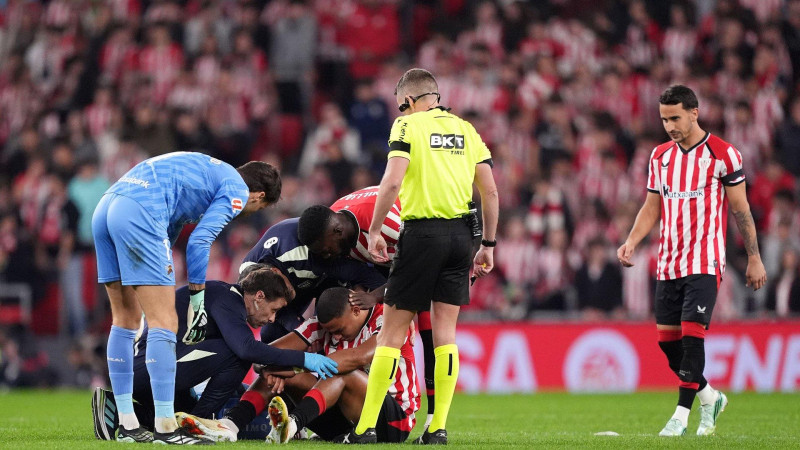
In the dying minutes of the first half in the Basque derby, with the score locked at 1-1, Nico Williams made a driving run into the box and collided with Jon Aramburu. Referee Alejandro Hernández Hernández immediately pointed to the spot, but the real drama unfolded in the VAR room, where official Carlos del Cerro Grande was completely misled by a distorted heartbeat graph from the Kinexon sensor. A synchronization lag of 20 to 40 milliseconds – equivalent to one or two video frames between the ball sensor data and the broadcast feed – meant the system failed to accurately register that Aramburu had touched the ball first. This invisible millisecond discrepancy completely distorted the reality of the challenge, turning a perfectly clean tackle into a harsh penalty and ultimately deciding the match.
RFEF admits technology blunder as La Liga faces crisis of faith
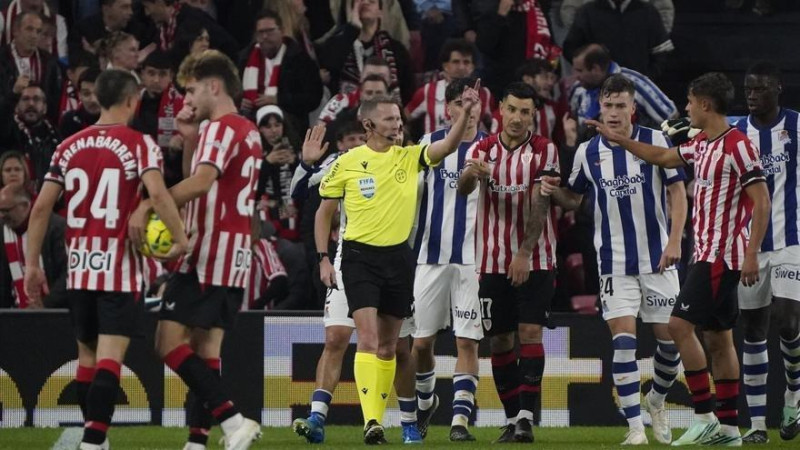
Immediately after the match, German tech firm Kinexon was forced to issue an urgent report, admitting that Jon Aramburu had indeed touched the ball before colliding with Nico Williams. This belated admission instantly sparked fury from Real Sociedad, who were left empty-handed. Yet, rather than defusing the situation, the Technical Committee of Referees (CTA) sparked further controversy by defending the officials, arguing they had followed protocol based on the data available to them at the time.
Crucially, this incident exposes the severe consequences of over-relying on automated sensor technology at the expense of the on-pitch officials' natural vision. When referees inadvertently surrender their independent critical thinking to machines, the crisis of confidence in La Liga deepens further.
The Editorial View
The Kinexon glitch in the Basque derby serves as a stark reminder that technology, no matter how advanced, must only assist and can never fully replace human judgment and critical thinking. However, La Liga chiefs should not rush to scrap smart ball technology, as doing so would represent a major step backward in the digitalisation and modernisation of the global game. Instead, the ultimate solution lies in establishing a more balanced framework where sensor data serves merely as a reference, restoring final authority to the intuition and on-field authority of the referees.

Comments